

One relationship —from offer to keys to renovation.
Most real estate is a relay race of strangers — agent, contractor, lender, insurer — none of whom answer to each other. Academia Real Estate Corp is a licensed Florida brokerage that works hand in hand with an affiliated, separately licensed Academia construction company, under a separate written agreement — so the people deciding your outcome actually coordinate.
Jose Urdaneta
Real Estate Broker and owner of Academia Real Estate Corp. Jose built the company around a simple conviction: in South Florida, the value of a home and the ability to sell it are inseparable from the physical condition of the building — so the brokerage should hold the tools to change it.
- OfferWe broker the dealA licensed brokerage represents you on the buy or the sell — the same as any agent, with the market read to back it up.
- KeysWe close it cleanlyWhen inspection, insurance, or a system flag threatens the deal, the fix doesn't leave the building. It's already in-house.
- RenovationWe build what it needsRoof, A/C, electrical, plumbing, kitchen, finishes — self-performed on one schedule, under one set of licenses.
A brokerage and a separately licensed construction company — working as one coordinated team.
When a sale needs a new roof to close, a kitchen to lift the price, or a wind-mitigation upgrade to help with insurability, the work is coordinated between the brokerage and an affiliated, separately licensed Academia construction company, under a separate construction agreement.
- General Contractor
- Roofing
- A/C
- Electrical
- Plumbing
- Solar
- Pool/Spa
- 01Real Estate Brokerage
- 02Development
- 03New Construction
- 04Restoration
- 05Home Improvement
- 06Pools & Hardscape
- 07Sales & Leasing
“Plato gave the fifth solid not to an element, but to the whole.”
After Plato · Timaeus“Real estate is the order that holds the other four together.”
The four elements — energy, climate, water, structure — are built at academiadevelopment.com. The whole lives here.
The crews, the sites, and the skyline they work in.
Licensed trades, a Pembroke Pines base, and the South Florida market we read every day — the same company from the offer to the renovation.
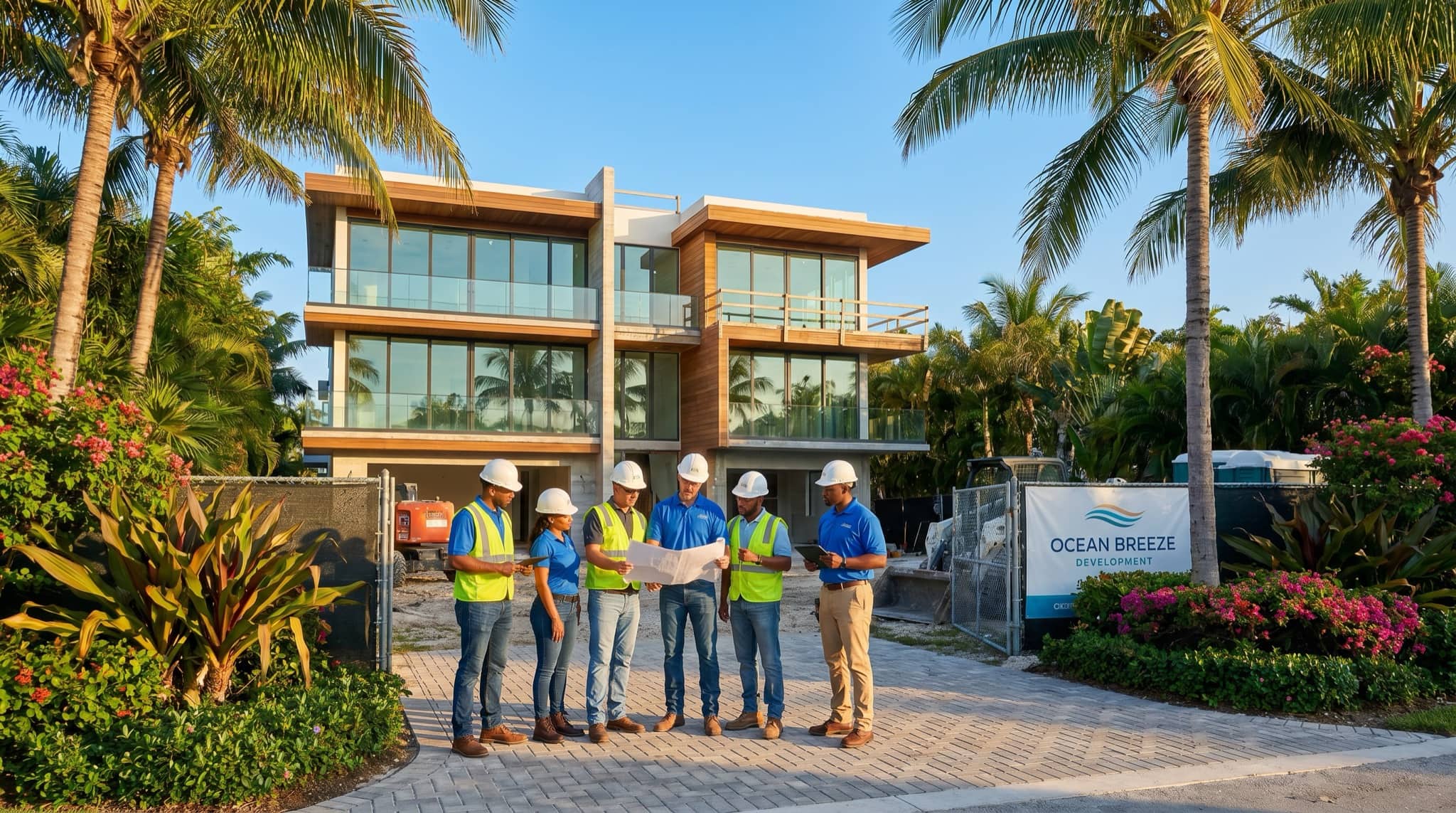
Professional construction team in hard hats at a South Florida site, South Florida. 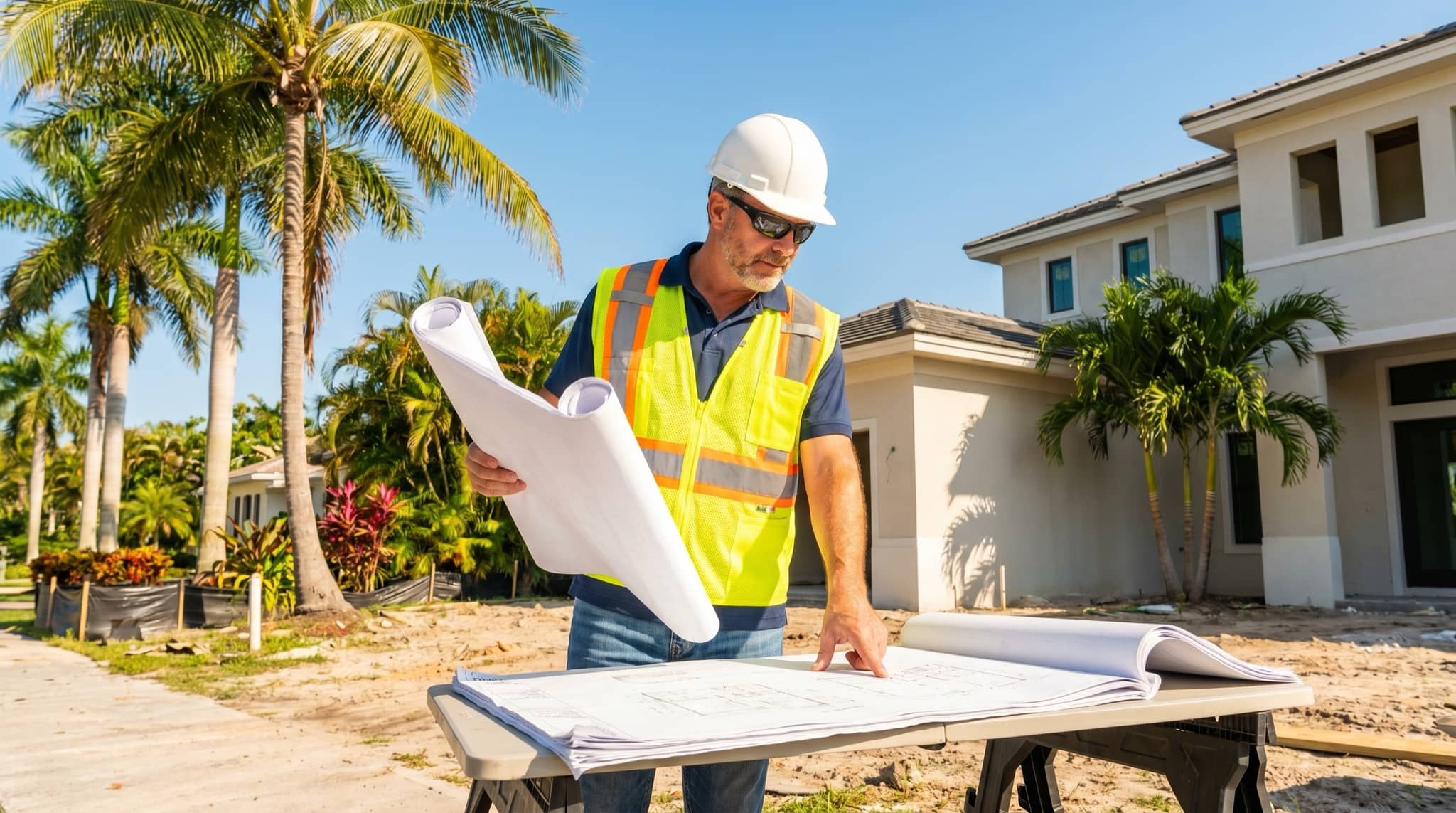
Florida contractor reviewing plans on a sunny site with palms, South Florida. 
Architect's table with blueprints and a model of a Florida home, South Florida.
What the integration actually buys you.
Home Improvement
The renovation side, scoped against resale lift and days-on-market — not aesthetics for their own sake.
Explore→Home Performance
The systems work that keeps a South Florida home insurable, financeable, and sellable.
Explore→Join Academia
How agents use this integration to offer wider services and win more listings and clients.
Explore→What it means to work with a realtor who is also a licensed contractor in Florida.
Academia Real Estate Corp holds both a Florida real estate broker license and a Florida Certified General Contractor (CGC) license under one company. That combination is uncommon — and it changes what the company can actually do for a client in ways that a referral network cannot replicate.
- One fiduciary, from contract to construction
- When the same licensed entity holds your real estate contract and your construction contract, there is no gap between what was promised at the listing appointment and what gets built. One company is accountable for both.
- Real cost-to-cure, not a guess
- A broker who can't build estimates repair costs from comps and intuition. A brokerage that self-performs the work prices it from labor, materials, and schedule — the number that actually closes the deal.
- Insurance flags get fixed, not referred out
- An FPE panel, a polybutylene repipe, or a roof past its insurance life blocks more South Florida closings than price. When the brokerage holds the CGC license, those problems are solved in-house — no contractor search, no scheduling gap.
- Pre-listing improvements that close deals
- Most brokers recommend improvements. We scope them, permit them, and self-perform them on the seller's timeline — then list the home with a documented upgrade package that removes every buyer objection.
- Value-add investing without a GC search
- BRRRR and value-add investors in South Florida normally coordinate a broker and a GC separately. When the brokerage is the GC, the rehab scope, the ARV, and the exit strategy come from the same team — and the cost-to-cure in the spreadsheet is the cost delivered on-site.
- Permits, inspections, and warranties included
- Construction work performed under a Florida CGC license is permitted, inspected, and covered by the contractor's license — giving buyers and lenders a documented scope, a final inspection certificate, and licensed accountability for the work.
Realtor who is also a licensed contractor in Florida — what that actually means.
What are the benefits of a realtor who is also a licensed contractor in Florida?
The core benefit is a single point of accountability across the entire transaction. A real estate broker who is also a Florida Certified General Contractor (CGC) can scope repairs during the listing presentation, self-perform permitted construction work, and close the deal — without handing the client off to a separate contractor who answers to no one. In South Florida specifically, where a roof age, an FPE panel, or polybutylene pipes can kill a closing, having the fix in-house means the obstacle is removed on the seller's timeline, not a subcontractor's.
Is it legal in Florida for a real estate broker to also hold a contractor's license?
Yes. Florida law permits a licensed real estate broker and a Florida Certified General Contractor (CGC) license to be held by the same legal entity or individual, provided both licenses are maintained in good standing with their respective licensing boards — the Florida DBPR for real estate, and the CILB (Construction Industry Licensing Board) for the CGC. The licenses carry separate scopes of practice, bonding, and insurance requirements. Academia Real Estate Corp holds both and operates each under its applicable license.
How does a dual broker/contractor brokerage help buyers in South Florida?
Buyers benefit most when inspection findings threaten the deal. In South Florida, those findings are usually construction-related: a roof at or past the insurance-life cutoff, an FPE or Zinsco panel a carrier won't insure, aluminum wiring requiring remediation, or polybutylene pipes flagged on the 4-point inspection. A brokerage that can scope and self-perform those repairs lets a buyer negotiate real repair credits against a real scope — not a guessed number — and often keeps a deal alive that another brokerage would watch collapse.
How does the broker/contractor integration work for sellers pre-listing?
Before listing, we assess the home as both broker and contractor: what the systems will say on a 4-point inspection, what the roof says about insurability, what buyers in the comp set will flag. We then scope and price the improvements that move the appraisal and the offer — and we can perform them in-house on the seller's timeline, with permits, so the listing goes on the market with a documented, inspectable upgrade rather than a 'recent updates' bullet point.
Does working with a broker/contractor brokerage cost more?
The brokerage commission structure is the same as any South Florida real estate transaction. The construction work is a separate contract priced at market rates — the advantage is not a discount on labor, it's the elimination of the coordination gap, the scheduling delay, and the accountability vacuum that happen when a broker refers you to a separate GC who has no stake in whether your deal closes.